Story Ideas

Molly, My Brand New Character

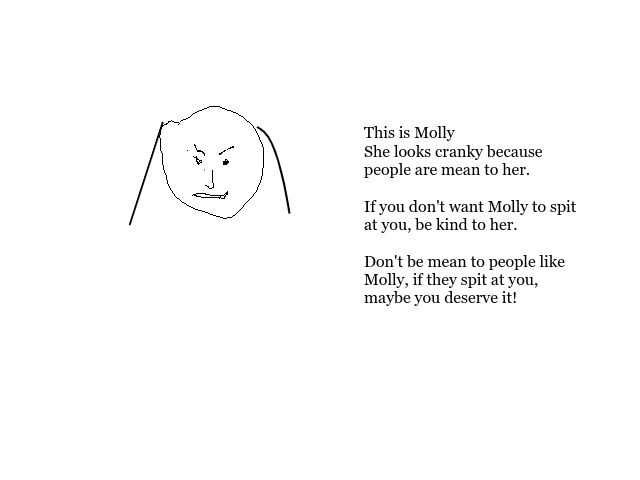
This is Molly

Molly has lived a hard life. I am going to be doing some thinking about Molly and why she is like she is. Sometimes people have many reasons for why they are cranky.


Molly might not seem to have anything likable about her, but if you talk with her, maybe you’ll find things about her that you never knew. If you know anyone who doesn’t seem likable, maybe you need to have a chat, you never know what you might learn.

Everyone has one thing, at least. Maybe Molly makes lovely cookies. Maybe Molly loves dogs, but she was never allowed to have one. Poor Molly, maybe she just needs someone to listen to her …

Some people don’t realise there is any possibility of having a friend, so they don’t bother trying to be likable. Some people have had friends, but lost them from death, misunderstanding, many different reasons.

If you know people like Molly, why not give them a chance, you might both be surprised, in good ways.

It might take a while for Molly to want to be your friend, but please help, by making it easy for her. If you smile kindly at Molly, she may find her own smile again. She lost it a long, long time ago …

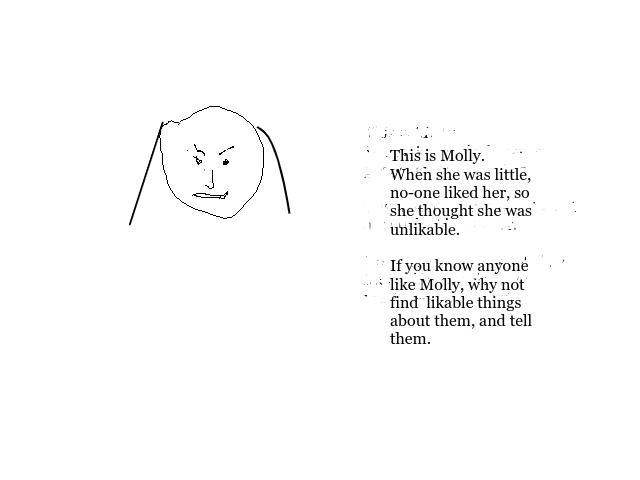
This is Molly2 (2)


Uncategorized

From Fiction to Non Fiction

When the mind feel like a holiday from coming up with new ideas for the novel I’m writing, new back story, dialogue, plot issues and answers, that’s when it may be time for writing some more non fiction. And right now, that is just the spot I feel I am currently in.

It’s Mothers Day, and I am having a lovely day of doing not much really, while my husband gets on with doing things – making coffee first thing in the morning for me, as a lovely Mothers Day gift, then cleaning, and now working hard on getting our main meal cooked and lovely. Roast chicken with vegetables, in the Weber, lovely!

I was reading various things on Facebook and Twitter, then I decided it was time to get some writing done. If I want to call myself a writer, I have to write, right? Right! So I’ve spent a few hours adding to my current non fiction work, an exploration on the everyday wisdoms I have found, and am continuing to find, in my life. I envisage this book being popular with people who are working at finding deeper meaning in their own life.

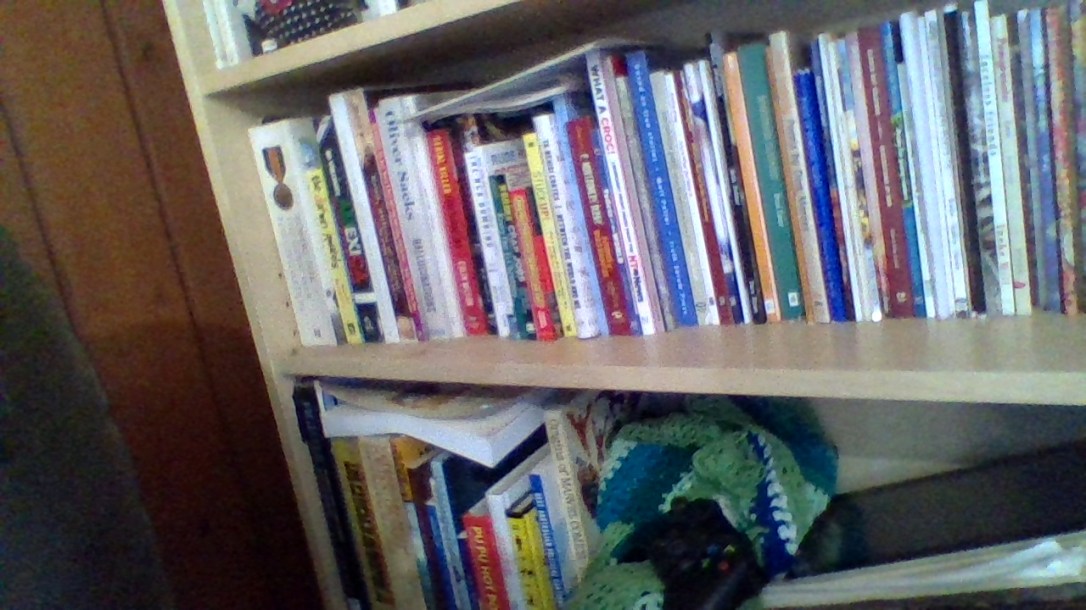
poetry books

(this book case is right next to me, when I sit on the sofa with my laptop, and write, and the green and blue thing is a small blanket I’ve been meaning to finish crocheting, but need to get more yarn for, and keep forgetting to …)

XXXXXXXXXXXXXXXXXXXXXXXXXXXXXXXXX

This book is still a long way from finished, but I am finding the writing process a satisfying one, thinking, then writing, thinking, writing some more. The word count is slowly rising, but there are still many more words that need to be written.

And today, , a few days past Mothers Day, I have connected with this blog post, in draft form and am finishing it off, having just posted a new blog post here, with a new Creative Writing exercise, the sixth one. I’m happy with the post, it’s a good writing exercise, about using the senses in your writing, which is always a good idea to try to remember to do. It brings more into your writing.

It was a creative writing workshop I help a couple of years ago, so I had to make a few changes, which is definitely a ‘non-fictionish’ kind of thing to do. Perhaps I’ll get some more of that novel written today too, and more of the non fiction manuscript I’ve been working on, off and on.

So another blog post done, and posted, I’ll finish that coffee, feed Missy, then get my own lunch happening! Life, such a lovely life, I am living here!

Uncategorized

Creative Writing 6 – Using Your Sense(s)


There are at least five senses usually recognised for humans. They are the ability to see, hear, smell, touch and taste. Some people may add in another sense, extrasensory perception, which relates to things sensed through the mind, rather than the body. For this exercise, we will refer to as many of these senses as we can, in one poem.

The actual theme of the poem is free choice, but make sure it’s something suitable for the exercise. Think about life, where you are right now, with things to taste – food and beverages, on a main street with cars to hear as they drive by. Where are you seated, and what and where? On a steady and solid chair, at an also solid table, with paper, pens and other things to pick up and feel. Or somewhere else?

Or you may remember your latest visit to a garden, your own or someone else’s. With the wind, the sky, trees and creatures – birds, insects, flys, bees, flowers … Smell the flowers, feel the breeze, is there any heat form the sunshine, how does if feel?

Or you may like to remember something from your past, a special place you’ve visited, for instance. Remember back to that time, and recall it through memories of how your senses perceived it … I’m thinking about my many visits to the Torrens River from when I was a school kind. I’ve never written about that, even though it was an important part of my growing up.

imag0582_1

This poem of mine takes in some of these thoughts:

Making Sense of Life

Wind plays with the chimes

And willie wagtail joins in

Cheeping and chirping in tune

Wind through pine trees

gives a constant droning backdrop

And sparrows join in too,

repetitive chirps, constant reminder,

they’re here as well.

The occasional car is a different sound

Intrusive but infrequent

As are billowing clouds of dust

That threaten me as I sit here

On our front veranda

Senses switched on and tuned in

Experiencing everything.


The wind in my hair tickles and taunts

Blowing across my face

And into my eyes, nose and mouth

Reminding me of its length

As I think of times long gone

When my hair was a glorious

Childhood Cloak of honour,

Thick and golden honey-red.

Now my hair is falling out,

Boring brown hairs disappearing

As the wind catches loose strands

And takes them out of sight,

But not out of mind.

Memory and mirror

Hold truths for me,

Separate but connected.

The past still remains

But life changes it, prunes away

Even as it adds.

Memories take on different meanings,

Insights reveal adult truths

Or child-like ones, showing truth

In a new and textured way,

Where meaning has many ways of being,

And all can be true. Or none.


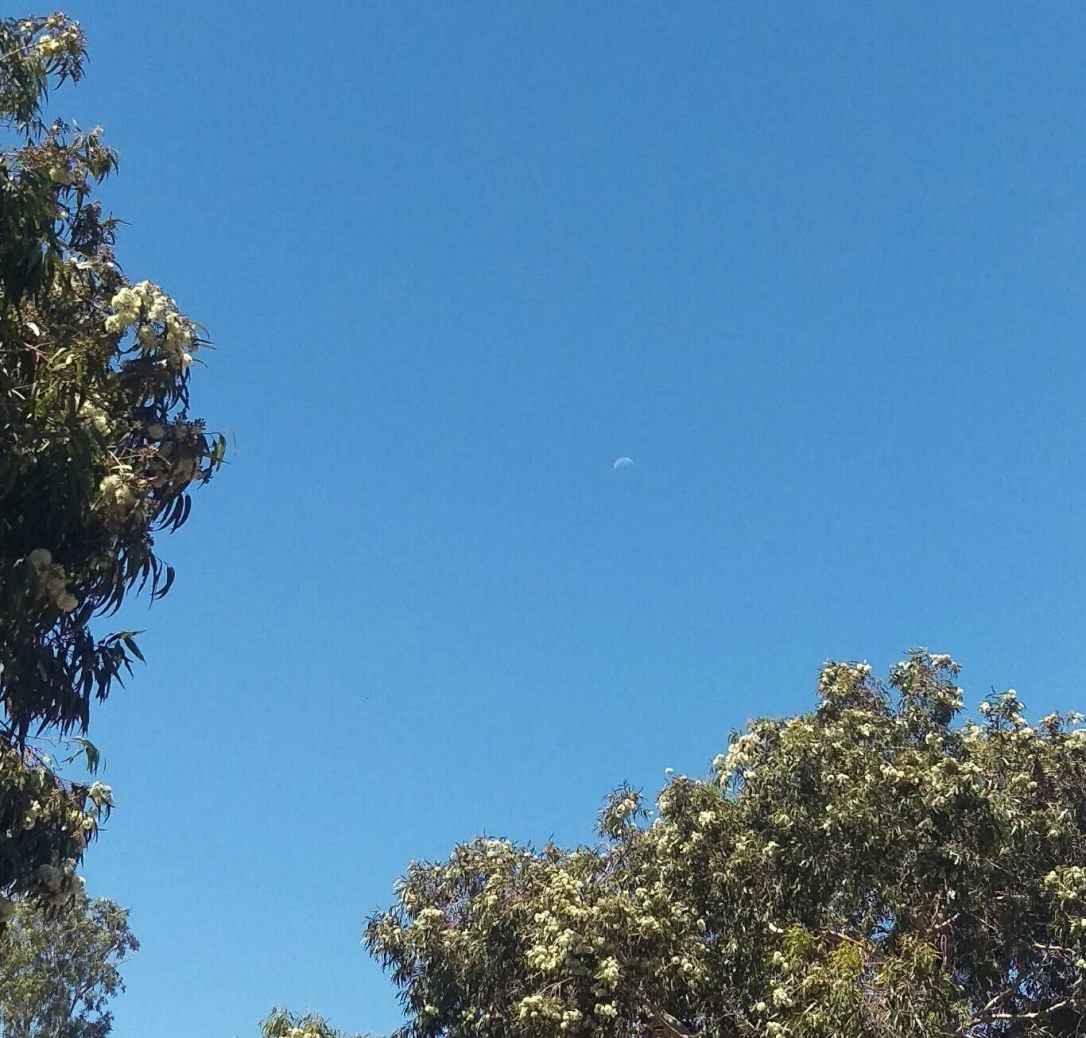
imag0572_1


So that’s what we’re doing, get thinking, and then get writing!

poetry

Creative Writing 5 – Poetry Presentation/Performance Poetry

Another aspect of poetry

So today, we are going to explore ways to better present our poetry to others. Poetry in a book is heard by the listener in the way they read it. That reader may simply read word after word, after word in a monotone boring way. They may put lots of emotion into the words they read and hear inside their head and find the words exciting because of the effort they put into it.

What we are going to do is to present our poems in ways that will excite the audience, and I hope excite ourselves too. I’m sure you’ve all done some work in presenting things to an audience, but if you haven’t here are some ideas and clues on how to help make it an exciting event for the audience who is listening to you read your poem.


Poetry Out Loud!

We are going to firstly wake up ourselves and our voices. Stand up, make a little room for yourself. Spread your arms out to the left and right, slowly twist your body around, one way then the other repeat, repeat. Next, make fists, then spread your fingers out wide, repeat twice, slowly. Then shake your arms around while marching on the spot. OK, enough hard work, we’re ready to move onto the actual voice work.

In a clear and firm voice, say this:

La la la la la la la la la la Woohoo! Woohoo? Woohoo! Woohoo? Woohoo! La la la la la la


Give Your Poem All You Can!

A poem needs time to go from one person on to the next person, from you to your audience. Reading your poem slowly, and 2/3 speed or sometimes even slower, gives the listener time to properly take in your words, to think on the thoughts being presented.

You are now ready to read your own poem! Find an area in the room, imagine your audience and prepare to read your poem to your imaginary audience, putting into your reading all of the emotion your words call for.

Use your body too, hands, arms, whatever the poem calls for, gestures and so on as appropriate for your poem. In that same clear and firm voice, read your poem – clear – firm – slow – Don’t be afraid to really put on a performance, that is what we are doing here, performance poetry, and that’s what the audience is here for!

I want youĀ to use your voice to wrap up your new poem, in love, with emotion and meaning, so any audience who listens to you read your poem, truly understands the great worth of your fine words!

I will present the poem I wrote earlier this week, that I brought along yesterday with the notes for that session. I did a little editing after I did a practise reading earlier today, and I hope I made it better. Reading your work out loud is always a valuable method for finding the places where your poem doesn’t quite flow the way you and the audience want it to.


Imagine me performing this poem, with actions and with emotion, giving my all, so you will feel my words in your head and in your heart.
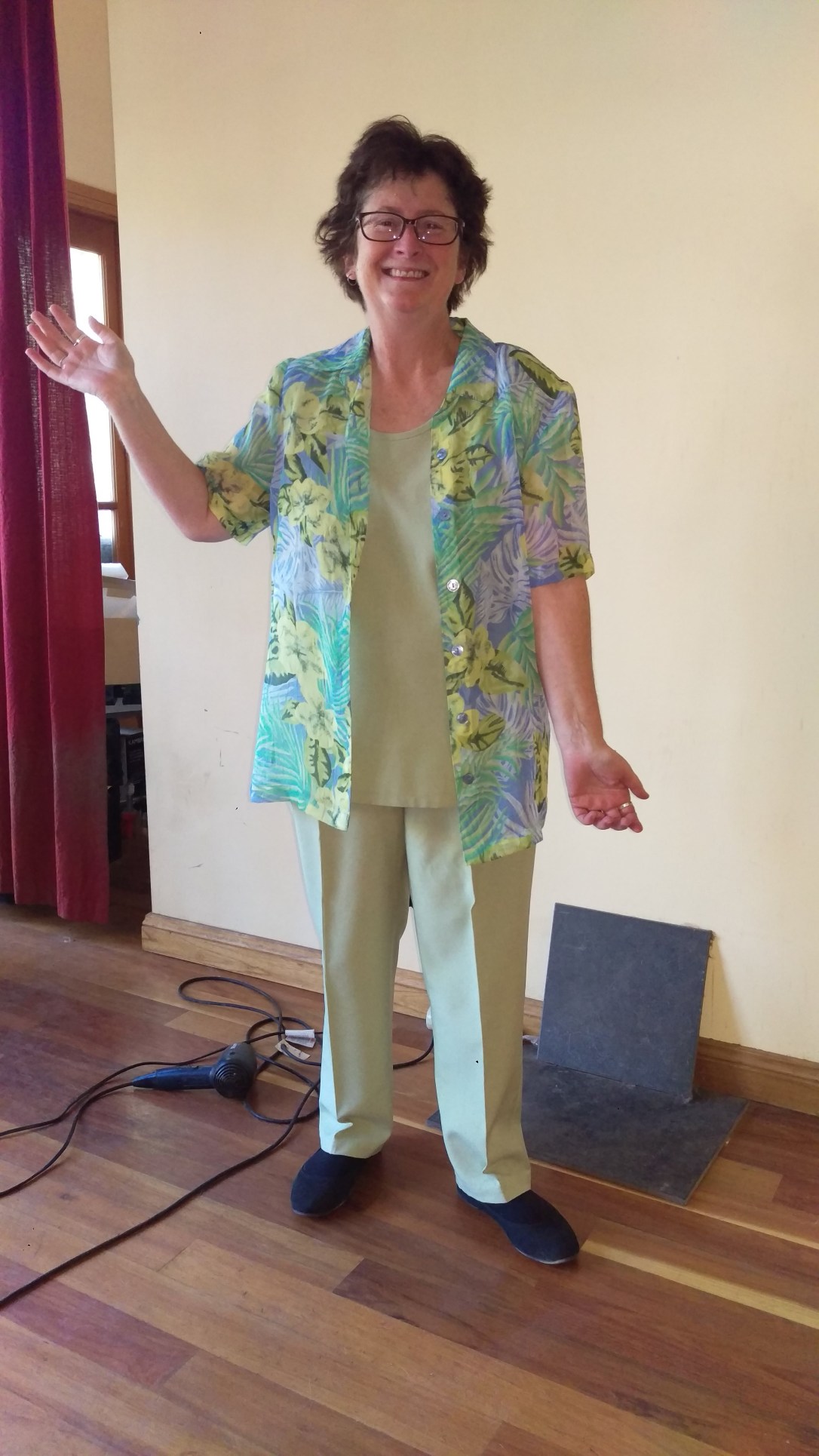
 

image00000084

What is Freedom?

If the question blazes down on me like the sun,

blinding bright so I can barely see a thing

I do not know what Freedom is …


If the question sticks in my throat, making me cough,

unable to say a single word at all

I do not know what Freedom is …


If the question is like a flood of people

drowning me with their constant demands

I do not know what Freedom is …


If the question is a weight on my shoulders

burdening me so I cannot dance and play

I do not know what Freedom is …


But if my life is full of love, joy and wonderful things

I am able and allowed to do, I no longer need to ask –

then and only then, do I truly know what Freedom is!


Ā© Carolyn Cordon 2016


OK, know it’s your turn, slow & steady with emotion and meaning!


Thank you everyone, I hope you’ve found this useful.


Carolyn Cordon offers sincere thanks to Martin Christmas, Poet, Performer, and fine friend. He is the person who showed me how to perform my own work with emotion, and with heart, and he will be forever be in my heart too.

poetry

Creative Writing 4 – Using Poem of Another

No, Not Plagiarism!

Fear not, I’m not advising anyone to use poems of other poets, and saying they are your poems. This is plagiarism and is rightly against the law. What I am referring to is to use the poems of other poets are inspirations, and ‘templates’ perhaps.

I’ve done this workshop in my favorite venue in Gawler, with gratifying results in the past.

To do this workshop, I advise you either raid your own stash of poetry books, or visit the library and borrow some of theirs.

poetry books


Workshop details

  • Other people’s poems can be an unending supply of ideas for the writing of your own poem. Some people think that if you read the poetry of others, you will somehow copy that work, and it will be stealing, instead of being creative.
  • I certainly don’t agree with that idea, I’ve often been inspired by the poems of others, and have come up with something perhaps on the same or a similar subject, but it quite a different form. There are millions of words in the English language, and it is fine to take words from the languages of others and use them too, English is famous for that!
  • I want everyone to find one poetry collections from the ones you are using, to find one tome that seems to ‘speak to you’. This means, one that is on a topic you like, or written in a way you find interesting, or even exciting. Once you have the book you want to use, find a poem or several poems, and write them out on your paper.
  • This poem will be your inspiration for writing a brand new poem for yourself today.
  • Take a poem, and change nouns, verbs, adverbs, adjectives, and make it a new poem in that way.
  • Or you can take the poem title and use that as the inspiration for a completely new poem.
  • Another way to use the other person’s work might be to take a particularly striking image or idea in their poem, and write your own poem using that as the title of, and inspiration for your own new poem.
  • These and other ideas can be fascinating ways into poetry, and I hope you are all as excited about what might happen, as I am!


My Poetic Response to this Workshop

I chose a poem from the book “Tadpoles in the Torrens”, which is a collection of poems written for children, that have much interest too, for adults. My chosen poem is ‘Cat Nap’ by well known Adelaide poet, Jules Leigh Koch.

For this exercise, I have change the animal to a dog, and followed the format of Jules’ poem, but as it applies to a dog instead of a cat.


“Dog DozeĀ by Carolyn Cordon

Our pet dog

as loud

as a thunderstorm


Makes her home

in our house

and in our garden


To imagine prey

large as dragons

small as mice”


I feel I have captured the idea of a dog, in a similar way the other poet captured a cat, and that is what I was certainly trying to do. I am also thinking about writing a haiku poem, similar to the famous poem by well known Japanese Haiku poet Basho, which was written about a frog jumping into a pond.

My poem, if I manage to complete it to my satisfaction, will be about the well known birds, galahs, Australian birds who live around where I live. I love to see them as they fly all around, squawking loudly!


Carolyn

Carolyn Cordon, President Adelaide Plains Poets, writer, poet, dreamer, cloud watcher …