domestic abuse

Why People Like Molly Hate Winter

This is Molly:

Screenshot 2019-05-17 at 5.52.43 PM

When Molly was young, she loved winter. She could go outside, running around in the rain, trying to catch rain drops in her mouth, and playing in all of the puddles everywhere. Then when she’d finish playing, she’d go back inside and have a lovely warm bath her mother would get ready for her.

But then, things changed. Molly would get in the bath to get warm, and wash off all the mud, like before, but her father would come into the bathroom and just look at her, not saying anything. His breathing would go funny, like he was running a race while standing there. Then he would start sweating then suddenly rush out of the room.

It took any joy out of having a bath for Molly, having her father there doing such strange things. As she got older, she began to understand what was happening, and Molly would only have a bath if she know her father was out, and wouldn’t be home until after she was out of the bath and dressed.

So that was one of the reasons why Molly lost her love for cold wet winters, having her own father staring at her naked body. But after Molly left home, when her father began lusting after her, as she realised later, she found more reasons to not love winter anymore.

Molly didn’t have a house to live in, once she’d left home. Sometimes there were houses she stayed in, when it felt safe to do that, but the best houses came with rules, and the worst houses came with men who would be like her father, lusting after her body, and doing things to her she didn’t like or want to have happen.

So if things were like that, with rules Molly couldn’t understand or like, she’s go, out on the road, and try to find places to sleep where she could make her own rules. But her own rules weren’t the proper ones, the legal ones, and Molly would often have to move on again and again. Molly didn’t like living with other people, she didn’t like talking about herself, she didn’t like the ‘interventions’ other people said she needed.

Molly got used to carrying her own things to keep herself warm no walls or heating needed. Molly lived on the streets, in holes, in empty places, staying as long as she could then moving on again when she had to, because other people arrived there to stay, or new building managers or owners came to do something with their building, fix it up, rent it out, and there was no room for Molly or others like her.

Winter with shelter in Australia, in particular in southern Australia, that is a nasty time, being rained on, unable to get dry, or to keep all of your things dry, sometimes, often really. When you’re homeless, making your own food is difficult without a kitchen of your own, and without the ability to store your food to keep it fresh. Sometimes Molly ate with others who lived on the streets, but she didn’t like it if people asked questions.

Molly had a story, but she didn’t feel the need to tell her story to anyone. She wanted to keep the shame of her story to herself. And freezing in winter, catching colds and worse, these things were part of her ongoing story. Walking around, carrying her bundle of blankets and other items she had, this was a way to get warmer, but that didn’t mean she enjoyed it. There wasn’t really anything much at all Molly enjoyed. There had been a cat, for a while, in a place Molly stayed at for a while, but the cat disappeared one day, and then Molly got scared by a newcomer, so she ‘disappeared’ too.

So Molly hates the cold and wet weather, Molly hates winter and so do many other homeless people. Winter is only good if you can get warm, and stay warm …

domestic abuse

Could Molly’s Life Mirror Courtney’s?

I began writing about Molly a little while ago, looking into and thinking on the life of a young woman, an angry, friendless, homeless woman, barely into adulthood, but with much life experience of the worst possible kind.

I was making it up as I went, based on vaguely heard new reports, some personal life experiences, and my own thoughts about these matters. Molly was slowly becoming a new person to me, as I wrote my short blog posts for this blog, one I’ve set up for myself as a writer.

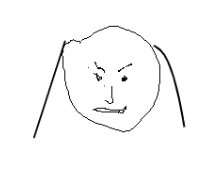
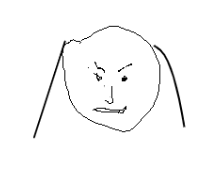
I drew the picture of Molly’s face first, Screenshot 2019-05-17 at 5.52.43 PMand that image spoke deeply to a part of my heart, myself, and I felt connected to her, and her horrid life. And then, I heard of the awful murder of a young woman, Courtney Herron, and I shuddered. This young woman’s life could easily have been the life that my fictional character has been living.

Will I eventually write of a similar ending for Molly, could I do that to this character I have come to care about, even to love, or at least feel responsible for? What kind of life will I eventually give young Molly? Can I write her a happy ending? And even if I could do that, will I? I would certainly like to, but would that be honest?

I’ve been talking about Molly finding her lost smile, getting a better life, that allows her the permission and the ability to smile a real, happy smile, rather than the sneer that almost permanently mars her face.

Thinking about the death of Courtney Herron in Melbourne, beaten to death in a park is a reminder that reality is far from the fiction that is Molly’s life, even if there are similarities. So I’m pondering, what to do. Do I continue posting occasional posts about aspects of Molly’s life, or do I let it go, and turn my mind to other of my writing projects …

My own life continues on, in vastly different than Molly or Courtney face or faced. But I am a woman, I have lived at least some aspects of the lives of these two women, but not any of the more difficult aspects. I have a smile, a real and happy smile, and I have many things in my life to smile about.

I have a home, a partner, a loving and caring family, and many lovely friends who care about me too. I am not a Molly, I am not a Courtney. But I am a writer, and a person who cares about others, and if I can, I want to use my writing skills, to examine further, the lives of troubled people, in particular troubled women.

Something I’ve just written on Facebook seems relevant, at least in part, to these words. It relates to happiness, and is certainly something I have come to believe to be true. Our happiness is ours to look to, no-one else can make us happy. This is my Facebook comment in response to something I found and posted on my own Facebook page:

“All of us must bear responsibility for our own happiness, and only our own. Others must do the same, and realise their happiness cannot be dependant on others, it is up to all of us to look after our own happiness.”

The things people do, that isn’t what makes us unhappy, not directly. It is our response to the actions of others that makes us unhappy. Of course there are some actions of others that would be difficult to be happy about, that is certainly true. Being beaten by someone, that would be impossible to react happily too, unless you have an extremely twisted mind.

So, not all men are brutal attackers, not all young woman will face vicious attacks. These are good things, for sure,  but the truth is, some men, and at times but far less often some women too, attack others brutally. And both women and men may experience terrible and brutal violence from others. Life is not always ‘nice’ or ‘pleasant’. Life can be a terrible battle ground.

Surely it is up to us all, to do our best to ensure those around us are safe, and live peaceful lives, unharmed my the kinds of brutal actions I’ve mentioned in this post. We all have a desire, I’m sure, for a better life than that, for ourselves, and for those we love.  May we take actions to ensure such things go that way, and we all have easy lives, not difficult ones.

domestic abuse

Helping By Listening

This is Molly.

Screenshot 2019-05-17 at 5.52.43 PM

Molly is not one person I actually know, Molly is many people I know of, and may know without realising that I know these things about her. Abuse, particularly of a sexual kind, is a hidden and shameful thing, even these days, when we are apparently all open about sex.

But things done to children often go unseen by those outside of the family, hushed up, denied ‘if necessary’, and to feel embarrassed and ashamed about if they happen to you. Sexual abuse, not only of children, but of women and men too, is a thing to be stamped on and stopped.

In an ideal world, this would happen, but this is far from an ideal world, and so women like Molly live all around the world, hiding from society, whilst remaining right there in the world with us, hoping no-one will notice them, and hurt them again.

These damaged souls deserve our sympathy, but they are unlikely to ask for it. Many of them don’t understand that other people truly do care, and want to help them. If a person gets knocked down often enough if and when they manage to stand up, then eventually they may simply stop trying to stand up to get what they should be given.

If you ever come across a person like Molly, someone on the edges, not seeming to want to join in, an angry person perhaps, bitter about what they have been kept from, or angry about the bad stuff they’ve been given, then why not see if they are willing to talk to you. Sometimes the opportunity to talk can open up the floodgates, and if you prove yourself to be a good and non-judgemental listener, there’s no telling how much you may learn, or how much you might help, simply by hearing this person’s story.

Listening actively is a skill, one well worth following up on, if you have any ideas of taking on  any kind of informal counselling roles, like the one I have been writing about here. Active listening involves pay these aspects: pay attention, show you’re listening, provide feedback, defer judgement and respond appropriately.

Listening without jumping in immediately with your own opinion is a great skill, a rare skill to have, because so many people only have a conversation to have their own story being heard. People like Molly though, they need to be properly listened to, if they feel safe enough to talk. If you talk over the top of them, they will close down, and you won’t have helped them.

People like Molly don’t deserve such treatment, if they try to reach out, they deserve a sympathetic listener who will let them say all they feel they need to say.


domestic abuse

Falling Through the Cracks

This is Molly.

Screenshot 2019-05-17 at 5.52.43 PM

Molly has no friends, and doesn’t want any, anyway. Molly doesn’t think anyone would ever want to be her friend, and she doesn’t care about that. At least, that’s what she tells herself, and she believes what she says.

If Molly had a friend, she thinks, she’s have to be nice to people, whether she wanted to or not, and smile. Molly watches people, the way they smile and hug, and she doesn’t want to do that.

But Molly has never had a hug from a friend who cared about her. Poor Molly … Molly can remember a loving hug, from someone, it was probably her nana, but her nana lives a long way away, and Molly isn’t even really sure where she lives, she’s forgotten. She knows her nana cares about her, but she also knows she has no hope of a happy life, because her nana told her that once, on the phone.

Molly isn’t even really sure what that ‘happy life’ would have been like, she just knows it’s different from her life, and it’s probably more like the lives of  the kids at school had.

Molly has tried to live a life, but has faced a instead, falling through all of the cracks there, every single possible crack. Molly isn’t anger at anything in particular, because there isn’t one thing to blame. She blames every single thing. Everything that cold go wrong has gone wrong. She has tripped over every possible stepping stone in life, missed every target.

Molly was never taught how to ‘get on’ in life. She has no real understanding of the concept of ‘life’ as such, but just that people can sometimes hurt here, and she never knows which ones will hurt her the most. So she keeps away from all people, as much as she possible can.

The task of socialisation of children is one that is taken on by parents & teachers. Well that’s the way it’s supposed to go, but sadly, for many children, there is no parent willing or able to take on that task, so the child suffers.

Without at least adequate socialisation, the child may fail to find out how to fit into society, and remain forever on the edges, never knowing what they’re doing wrong, or how to find out the proper ways to be, so society sees them as a problem, if they are even noticed by their society. They live on the edges, and hide themselves away if they can, always …

Molly is not stupid, but she is profoundly restricted in her abilities to find her way through the seeming maze that is the world she is trying to live in. Will Molly ever find clues and lessons that may lead her out of the maze that is her sad, sad life?

Molly was quiet in class, never said a word wrong, and barely ever said a word at all in class, or to the other students or teachers. She was the weird kid, that everyone ignored, and she seemed to like to be left alone anyway, so no-one worried, really.

Who can tell? We’ll just have to wait and see. If you ever come across anyone like Molly, maybe you may become the one person who cares enough, to help that person. Would you do that? Are you brave enough and do you care enough?

http://school-age-children.yoexpert.com/physical-and-emotional-growth/why-is-it-important-for-children-to-learn-socializ-1761.html


domestic abuse

When Molly Fought Back, the First Time

A new idea for Molly’s story – she leaves home very soon after her father slapped her hard, and grabbed her, trying to drag her off to his bedroom, she fights like a wild cat, and races off through the back door, jumps over the neighbours fence, and then just goes, as far away as she can.

She had her wallet in her pocket, with her bank card, and she knew there were other things of her in her school locker, so knows that’s where she has to go, to get all of her things before her father can go to the school and get everything.

Molly is twelve. Her father had been nasty to her, telling her she’s dumb, and will never amount to anything, that he doesn’t know why he should have to spend his ‘hard earned money’ on her fancy stuff she wanted all of the time. He’s just begun looking at her when she goes into the bathroom before school, to make sure she washes her hair properly, and doesn’t waste all of the shampoo and conditioner.

She doesn’t like him being in there, and thanks to the sex ed classes they’ve begun at school, she is starting to realise something is wrong in the things he does with her, and has been doing since she can remember. She’s beginning to feel that he’s been doing bad things to her, touching her in places she now knows he has no right to touch her.

Molly has enough documents that she can keep on going, out on the streets. She contacts her maternal grandmother at an early stage of her new life out on the street, who helps her as much as she can. She’s frightened of Molly’s dad too though, so she isn’t able to do a lot, in case he finds out, and beats her.