
Uncategorized

What On Earth Is My Brand?

I’m a Writer, Poet, Editor, Art Installation Collector/Creater/Curator …, Creative Writing workshop presenter. From the first two in that list I make tiny bits of money, occasionally, and for the first, a larger bit of money once a year.

The rest of the items on that list are things I do as a volunteer, or for myself. You could say I’m a Creative, and you would be getting close to the truth, but, but, it isn’t a business, at least not yet it isn’t. The question is though, could I make it a business, and a maybe bigger question is, do I want to make it a business?

These ideas are in my head more right now because I’ve paid a reasonable amout of money to attend a day of ‘small or micro’ business workshops, all in the one place, all with the aim to teach me, and the others attending, how to be better at running their business.

I had a fit of enthusiasm and registered, willingly paying out the money, with barely a thought about whether I could actually call myself someone who was, or could be in business.

I sell my books every now and then, but most often for only enough money to get back the acual money put in to having the book printed. And the editing job I do for fun, well that’s for a monthly newsletter that I put out for free to obtain, but I actually pay money out to get it printed now.

Once upon a time, the newsletter was printed by myself in my job working in a council, then later it was printed by various offices of politicians. But those all fell though, so if I want to have this particular newsletter printed, I have to pay for it myself.
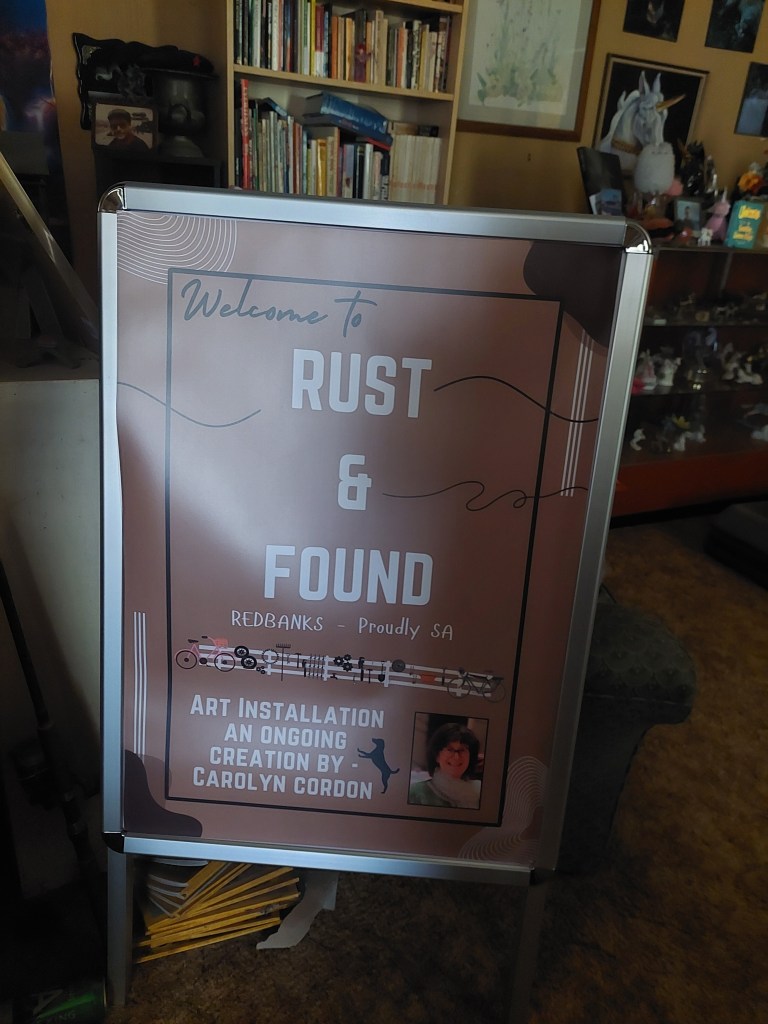
One of the things I do, and enjoy working on. But it doesn’t bring in any money for me, not yet. I’d love to get involved in tourism and show off what I’ve created, and even talk about it all to interested others.

Could that be a business? It would be great if it could be! Maybe I’ll find out how to do that, at the workshops I’m attending on Wednesday this week. Or maybe those baby plans will all flitter away, and I’ll go back to being a volunteer and not think about any ‘I could be in business’ ideas.

We’ll see. It will become clearer, anyway, by the end of the day on Wednesday. I might find a great Mentor who takes me under their wing and shows me what I could do in ways that don’t frighten me! Haha!

Caro the Creative, or something along those lines …

writing exercise

Creative Writing Workshop 1 – Acrostic & Cordonostic

For this exercise we will concentrate on two different Poetry Forms, Acrostic poetry, and Cordonostic Poetry.

Acrostic poetry has been around for a long time, and is much favoured by school teachers, I think, who find it an easy way for their students to get into writing poems. With this style, a single word can be chosen, and then the first letter of each line begins with each of the letters of the word, in order. So, with my chosen word – Autumn, the first line begins with the letter, A, the second line, U, the third line, T, and so on, all the way to the final letter, N.


You can choose to use just one word for each line, or you can write a short phrase, whichever you wish. But a poem is not a novel, so keep those phrases short. Autumn is my favourite season, and I enjoyed writing this poem, some years ago.


The poem just below is my own Acrostic poem, based on Autumn, my favourite season. Attendees are to choose one of the four seasons, for their own two poems.


Autumn

April comes along, trees

Until then heat struck, though

Tended well, and watered

Ultimately recover,

Managing leaf colour changes –

Nature’s amazing beauty …


Next Poetic Form – Cordonostic Poem We may have looked at this form previously, but I will clarify what it is all about:


The Cordonostic poem is based on syllable counts, with the first line having three syllables, the second line having five syllables, and the third and final line of the first stanza (verse) having seven syllables.


For the second stanza, start with seven syllables for the first line, then five syllables for the second line, and three again for the last line. For the third stanza, follow the stanza count as the first stanza, and for the fourth stanza, follow the second stanza, and so on.


Using the same season as you used for your first poem, write a poem, using words and phrases about your chosen season, bearing in mind the necessary syllable counts for each line. For the title of your poem, choose a word that is relevant to what you have written.

You don’t have to concern yourself about the poem title first though, often you need to finish a poem to see what it’s about, and so what the title could be.


This poem below was written after I had done some research into why leaves changed their colours, and I feel it is a fitting tribute to the wondrous way Autumn brings on this colourful phenomonem.


Photosynthesis

trees, their leaves

red, orange, yellow

lovely, chemically changed


trees and branches a backdrop,

and a gallery

for the leaves


wind-released

they drift off downward,

as ground becomes a carpet


then leaves, in decay, produce

nutrients, and trees,

fed, grow more –


trunk, and leaves

then blossom, perhaps

and after blossom, come seeds


and then, wondrous, welcome fruit.

the process goes on,

always will,


so long as

trees get the water

they need, fruit will come again.


autumn – colour, winter – rest

spring – blossom, then fruit –

nature’s way …


Thank you, I hope you have enjoyed this poetry session today, and I look forward to our next session!


Carolyn Cordon,


Writer, Poet, Community member, lover of Nature

www.carolyncordonwriter.wordpress.com


kittycordo@gmail.com


0418806490